Your next great American road trip might just be electric
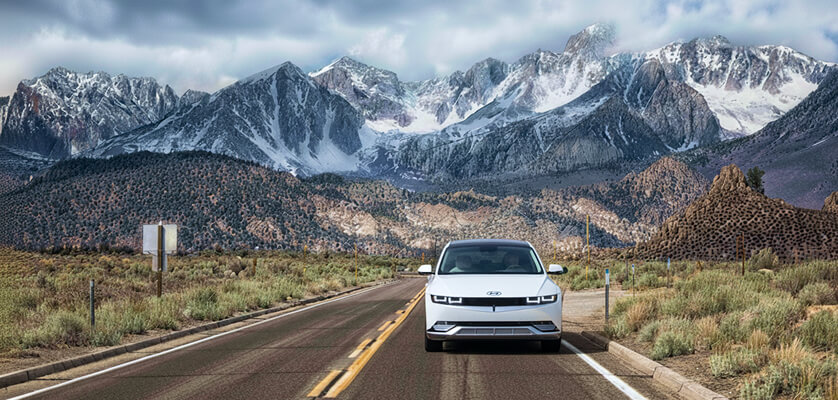
Recent statistics from the past few years indicate a significant shift in demand for electric car rentals in the USA. Does that mean “the classic American road trip is evolving with technology”?. From scenic coastal routes to vast desert highways and iconic places, travelers are embracing a new way to explore. With the rapid growth of charging infrastructure, improved battery range and an increasing focus on sustainability, EVs are surely becoming the future of road trips in the USA.
Whether you're planning to drive Route 66, visit the Grand Canyon, explore the Rockies, or cruise the Pacific Coast Highway, renting an electric vehicle offers a cleaner, quieter and more efficient travel experience. In this blog, we cover all aspects, including why EV rentals are gaining momentum, how they benefit travelers & why they’re set to dominate future U.S. travel trends.
EV rentals are booming — here’s what’s driving the surge
EVs are just not there for some “trend” but address the shift driven by technology, economics, sustainability, and customer demand. Now, travelers are looking for cleaner, smarter and cost-effective ways to explore the country. EV rentals have become an attractive option to traditional petrol or diesel cars. Here are the key reasons behind this growing momentum:
- Travelers are now going for sustainable road trips. With increasing awareness about sustainability and due to the changing climatic conditions, various travelers opt for eco-friendly vehicles.
- EV charging stations have grown in numbers. You no longer have to wait for hours like a decade ago. The USA has tens of thousands of public chargers along with fast-charging stations. The government has invested more through federal infrastructure programs.
- Modern EVs are equipped with the latest technology that allows you to drive roughly 250 to 300 miles (400 to 480 kms) per charge. This makes it a practical choice for the famous USA long drive destinations like the Pacific Coast Highway, Route 66 & the Florida Keys Overseas Highway.
- Electricity is way cheaper than petrol or diesel, which makes EVs an economical option for long drives. Some hotels, national parks and parking areas also offer a free charging facility.
- Today’s EVs have advanced features like voice controls, are equipped with large digital dashboards, provide smart navigation and give autopilot-like driving assistance.
- With the growing demand, car rental suppliers are expanding this particular category. Now, customers have great EV options to try for the first time.
- EVs provide various driver assistance features like automatic emergency braking, collision warnings, lane-keeping assistance & adaptive cruise control. They often rank high in safety ratings.
Let’s compare EVs and gasoline cars for road trips
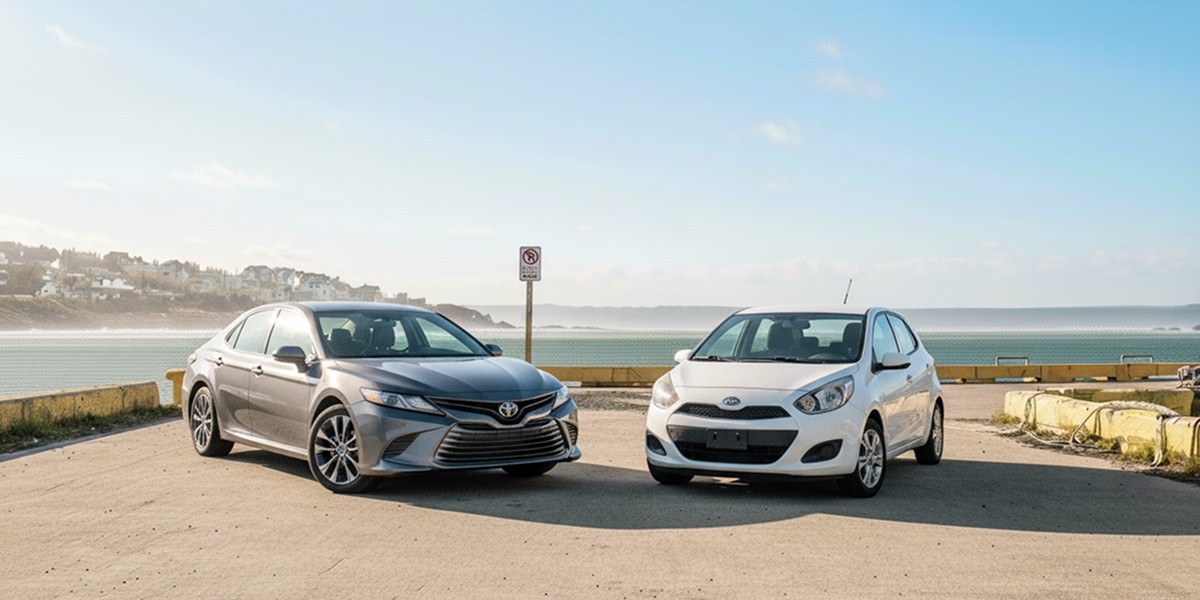
The table given below highlights the main differences between an EV and a gasoline car. This might help you decide on the rental you choose for your next USA road trip!
| EVs vs Gasoline Cars: Comparison Table | ||
| Feature | Electric Vehicles (EVs) | Gasoline Cars |
| Fuel type | Powered by electricity stored in batteries | Powered by gasoline - petrol or diesel |
| Running cost |
The cost is low, as electricity is cheaper than fuel; many free charging spots are available For example, charging an EV for a 500-mile trip typically costs $50 |
The cost is high as fuel prices fluctuate That same 500-mile trip would cost about $68 in gas |
| Maintenance | Minimal due to no oil changes & fewer moving parts | Higher due to oil changes, filters & engine repair costs |
| Environmental impact | Zero tailpipe emissions, eco-friendly | Produces CO₂ and other emissions |
| Driving experience | Smooth, quiet, instant acceleration | Noisier, more vibration, slower acceleration |
| Range |
250 to 300 miles (400 to 480 km) per charge. The range varies with the model & factors such as speed, temperature, terrain, battery health & the use of climate controls can all affect efficiency |
Mostly 300–500 miles per tank |
| Refueling/charging time |
20 to 40 mins at fast charging stations & several hours at level 2. It’s also important to remember that if a charger isn’t available when you need it, your wait time may increase. |
5–10 minutes at any gas station |
| Charging/fueling availability | still expanding in rural areas | Widely available across cities & rural areas |
| Best for | Eco-conscious travelers | Remote area traveling |
| Government incentives | Supported by clean energy policies | Fewer incentives, some states impose extra fees |
First time renting an EV? Here’s what you need to know
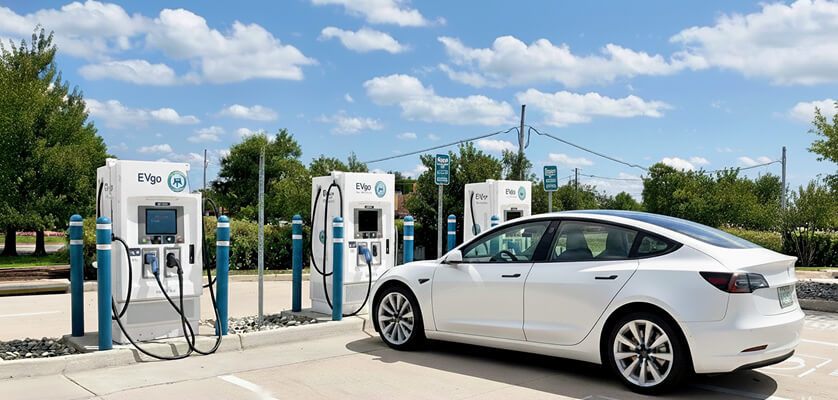
Renting an electric vehicle for the first time can feel exciting, but it also comes with a few differences compared to driving a traditional gas car. Whether you're planning a long U.S. road trip or exploring just a single state, the following tips will help you to get a safe & secure experience.
- You must know EV’s range before taking off. Check all the specifications and plan your charging stops accordingly. It’s a good idea to always leave a 10 to 20% battery buffer in case of traffic or unexpected route changes.
- Learn about level 1, level 2 and DC fast charging. A Level 1 charger is best for overnight charging as it is slow and usually found in a household outlet. Level 2 chargers take a few hours and are found in hotels, malls, and parking garages. DC fast charging is perfect for road trips, charges 0 to 80% in 20 to 40 minutes.
- You can also use EV trip planning apps like PlugShare, Tesla Supercharger Map, Electrify America or A Better Routeplanner. These apps make it easy to find chargers along your route, check availability & filter by charging speed.
- Always turn on the battery preconditioning option in your EV before charging or driving. This feature improves range and maintains battery health. Learn about regenerative braking settings. Such braking allows EVs to recover energy when you slow down.
- Always check charging costs in advance. Some stations are free, some charge per kWh and some charge per minute. Plan your stop according to your budget for a more efficient trip.
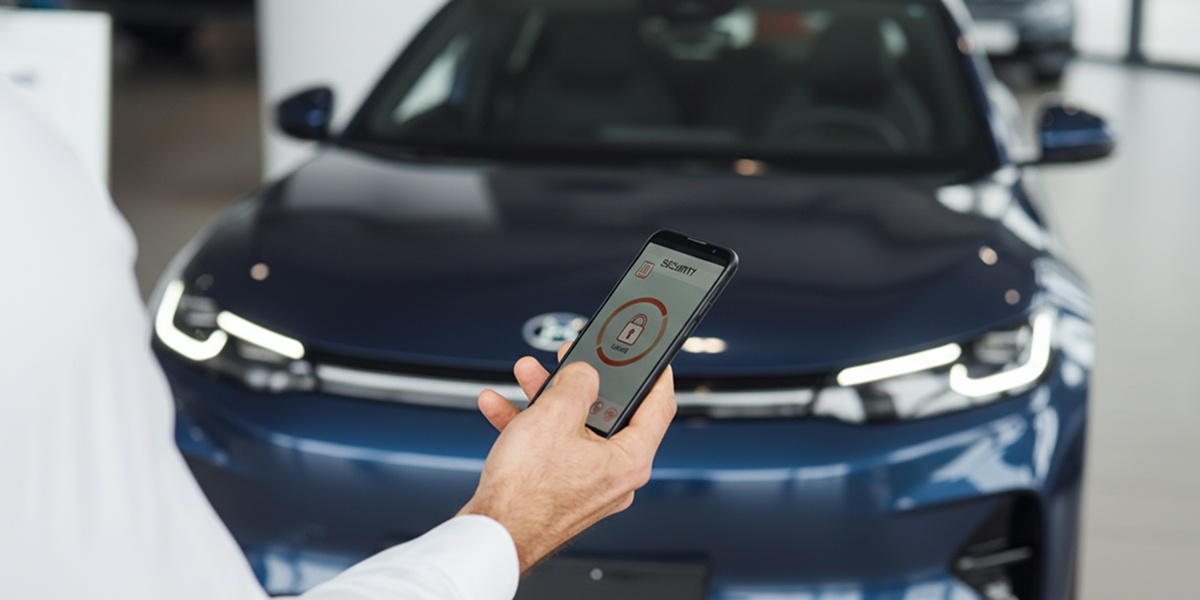
- Before picking up the rental, take a few minutes to learn how to open the charging port and to start/stop charging. You must know about the drive modes & the navigation.
- Never let the battery drop below 15% as it can lower the performance of the car. You don’t want to face a stressful situation, especially in rural areas, so it is better to carry a charging adapter if possible.
What to do if an EV charging station is offline during a road trip in the USA?
Even with growing charging networks, you can occasionally encounter a station that’s offline or temporarily out of service. Staying calm and prepared can turn a stressful moment into a simple detour.
- Start by checking your charging app or the station’s display for status updates, as many networks provide real-time information and may suggest nearby alternatives.
- If the charger appears unresponsive, try basic troubleshooting steps such as reconnecting the plug, restarting the session in your app, or moving to a different stall if available.
- If the station is truly offline, use your preferred charging app or in-car navigation to locate another charger within range. This is where keeping a buffer of 15–20% battery proves helpful, giving you enough energy to reach the next station without anxiety.
- For added reassurance, consider filtering for “working” or “recently used” chargers in your app, since these options are more likely to be operational. When possible, report the outage through the charging network’s support channel so other EV drivers are aware & the provider can address the issue promptly.
Here’s how to make your EV road trip across the USA smarter
Planning an EV road trip across the USA is a great experience if you prepare systematically. Follow these steps for a smooth and enjoyable journey:
-
Select the Right EV for your trip
Choose a model carefully after going through all specifications like charging speed, cargo space, seats etc.
-
Understand your vehicle’s range
It’s essential to know how many miles your electric vehicle can realistically travel on a full charge, not just the advertised range but the range you typically get based on your driving habits, terrain and weather conditions.
This awareness helps you plan trips with confidence and reduces the stress often known as EV range anxiety, the fear of running out of charge before reaching a destination or charger. To stay comfortable and avoid unnecessary worry, maintain a 15–20% battery buffer whenever possible. This extra cushion ensures you have enough charge for unexpected detours, traffic delays or changes in driving conditions.
-
Use EV trip-planning tools
Take assistance from some good planning apps like PlugShare or A Better Routeplanner. These apps show charger types, availability, user reviews & real-time updates.
-
Plan your route around fast-charging networks
Identify major networks and rural gaps on your planned route. Take a stop before entering low-infrastructure areas.
-
Book accommodations with overnight charging
Select hotels or Airbnbs that have Level 2 chargers for a full battery every morning. This will save you from relying on fast chargers during the day.
-
Always have backup options
Request an adapter from your EV supplier and save multiple charging apps.
Plug in, power up & explore these iconic US EV road trips

With the rapid advancements in the EV industry, exploring the famous road trips in the region has never been easier. Now you can easily travel long distances sustainably & without putting a hole in your pockets. Given below are some of the places that travelers like to explore in their rentals.
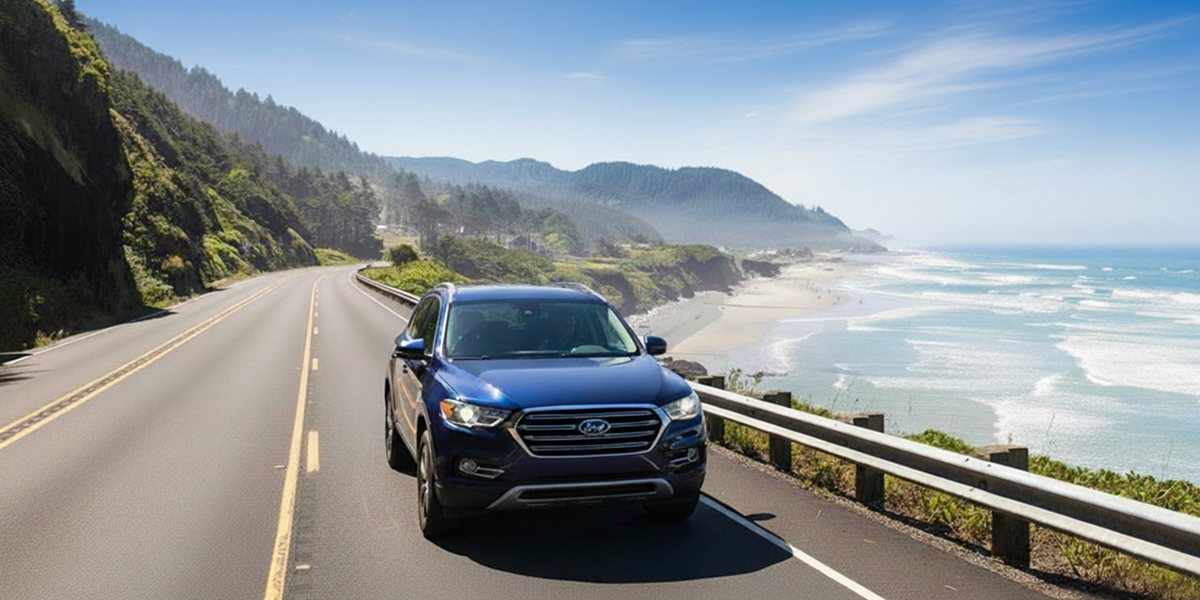
- Pacific Coast Highway (California) - it is one of America’s most iconic drives and it’s now EV-friendly. You will not face any charging issue as you get thousands of charging stations along the way, mainly in San Diego, Los Angeles, Santa Barbara, Monterey and San Francisco.
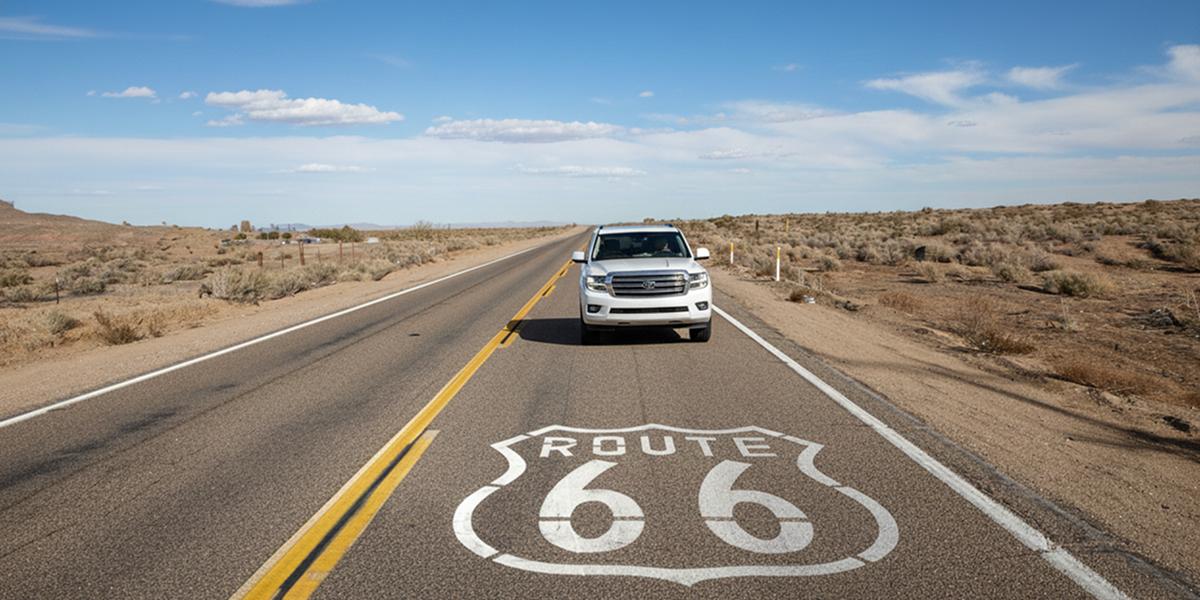
- Route 66 - this route is definitely on everyone’s wishlist and is also known as the classic American road trip. Over the past few years, it has become one of the famous EV routes in the US.
- Florida Keys Overseas Highway - Florida has invested heavily in EV infrastructure. The drive is 113 miles long with smooth roads and various charging stations.
- The Mighty Five Road Trip - decades back, this national park was not so accessible in an EV. However, now you get the best experience as the government supports EV travel & many charging stations are available.
- Great Lakes Coastal Drive - the freshwater coastline of Michigan is a hidden gem for EV travelers. With hundreds of chargers across the state, driving around the lake or exploring the Upper Peninsula is really convenient.
Need answers? Start here!
-
Is an electric car rental in the USA reliable for long road trips?
Yes. Modern EVs can easily run for 250 to 300 miles (400 to 480 km) per charge. Moreover, you get plenty of fast-charging networks nationwide.
-
Which is the cheapest electric car rental in the USA?
There is no single “cheapest” EV rental in the USA. The prices depend on various factors like the location, car model, rental duration and availability. You can compare the prices offered by different suppliers & book the best deal.
-
Can I hire a 2-seater electric car in the USA?
Yes, you can hire a 2-seater electric car in the USA through rental companies. Make sure to check all the specifications of the vehicle before making a reservation.
-
Where can I find an electric car rental near me in the USA?
You can find an electric car rental in the USA on various rental websites. Fill in the booking form with the required details & select the vehicle according to your preference.












































































































'%3E%3Ccircle cx='0' cy='0' r='7' fill='%23fff'%3E%3CanimateTransform attributeName='transform' type='scale' begin='-0.24691358024691354s' calcMode='spline' keySplines='0.3 0 0.7 1;0.3 0 0.7 1' values='0;1;0' keyTimes='0;0.5;1' dur='0.6407407407407407s' repeatCount='indefinite'/%3E%3C/circle%3E%3C/g%3E%3Cg transform='translate(50 50)'%3E%3Ccircle cx='0' cy='0' r='7' fill='%23fff'%3E%3CanimateTransform attributeName='transform' type='scale' begin='-0.12345679012345677s' calcMode='spline' keySplines='0.3 0 0.7 1;0.3 0 0.7 1' values='0;1;0' keyTimes='0;0.5;1' dur='0.6407407407407407s' repeatCount='indefinite'/%3E%3C/circle%3E%3C/g%3E%3Cg transform='translate(75 50)'%3E%3Ccircle cx='0' cy='0' r='7' fill='%23fff'%3E%3CanimateTransform attributeName='transform' type='scale' begin='0s' calcMode='spline' keySplines='0.3 0 0.7 1;0.3 0 0.7 1' values='0;1;0' keyTimes='0;0.5;1' dur='0.6407407407407407s' repeatCount='indefinite'/%3E%3C/circle%3E%3C/g%3E%3C/svg%3E)