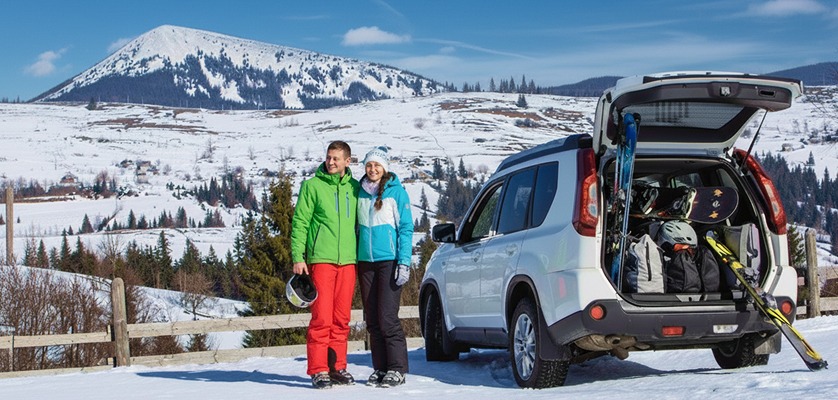
Planning a ski trip is exciting, but figuring out how to rent the right car for snowy, icy, high-altitude roads can be a little confusing. Whether you're heading to Aspen, Whistler, the Alps or Niseko, this guide covers everything from choosing the right vehicle to insurance, hidden fees, chains, elevation considerations & rare insights only locals and rental companies usually know.
Why renting a car for your ski trip is a smart move
Many travellers are not sure about shuttle, bus or car rental for a ski trip. But a vehicle gives you:
- Full flexibility for early-morning runs or late-night après-ski
- Easy access to multiple ski resorts
- Storage space for gear
- Cost savings for groups or families
Choose the right car type (This makes or breaks the trip)
Selecting the right vehicle for winter driving and ski-trip conditions goes beyond simply picking something big or sturdy. Factors like snow, elevation, temperature and road conditions all determine how a vehicle performs.
This section breaks down the practical differences so you can make informed, real-world decisions!
AWD vs. 4WD - What’s better for snow?
All-Wheel Drive (AWD)
AWD systems automatically distribute power to all four wheels. This improves grip on slippery surfaces without driver input.
Best for:
- Plowed highways
- Mixed conditions (wet & slushy roads & some parts have packed snow)
- In case you prefer automatic features without requiring further adjustments
Limitations:
- AWD relies heavily on traction control; if all four wheels lose grip (e.g., on icy grades), the system can struggle.
- Many AWD systems are tuned for stability, not torque-heavy climbing, which matters on steep mountain access roads.
- On untreated mountain passes, AWD may not provide enough torque or wheel-locking capability to push through deep, unpacked snow.
Four-Wheel Drive (4WD)
4WD systems offer modes for different terrains. A driver can choose between 2H (Two-Wheel Drive High), 4H (Four-Wheel Drive High) & 4L (Four-Wheel Drive Low) settings, delivering more raw torque and wheel-locking features.
Best for:
- Deep or unplowed snow
- Steep cabin roads or ski-area access trails
- Rural mountain travel
Limitations:
- Heavier vehicles with 4WD can slide more on ice despite the added power.
- You must have proper information about the driving modes. Using 4H or 4L incorrectly can reduce control or damage the vehicle.
Your Action Snack!
- For major resort roads: AWD is usually sufficient.
- For backcountry lodges, high-elevation passes or unplowed routes: A vehicle with selectable 4WD & a low-range mode performs better and offers a wider margin of safety.
SUV vs. Sedan vs. Van for ski trips
| Feature / Factor | SUV | Sedan | Van |
|---|---|---|---|
| Snow performance | Excellent (AWD/4WD common), good in variable conditions | Good on plowed roads with winter tires, limited in deep snow | Moderate (if AWD is available); long wheelbase stable but struggles in deep snow |
| Ground clearance | 7 to 11+ in (best for snow ruts & berms) | 5 to 6 in (lowest; risk of high-centring) | 6 to 7.5 in (mid-level; can struggle in unplowed lots) |
| Cargo space for gear | High; easy to load skis, boards & bags | Low; requires a roof rack for long gear | Very High; ideal for large groups & long gear |
| Passenger capacity | 5 to 7 | 4 to 5 | 7 to 12 depending on model |
| Handling on icy highways | Good; higher stance but more top-heaviness | Excellent; low center of gravity, stable at speed | Good; stable, but size makes maneuvering harder |
| Parking in snowy areas | Easy to moderate | Easy | Hard (long/wide footprint) |
| Fuel efficiency | Moderate | Best | Lowest |
| Best for | All-around winter vehicle; unpredictable snow conditions | Budget-friendly trips via plowed highways | Large groups sticking to maintained resort roads |
| Main limitations | Higher cost; more fuel usage | Low clearance; limited cargo space | Difficult on narrow mountain roads; low clearance for size |
Still confused? Here is the key: Choose SUVs for versatility, sedans for economy & paved routes, vans for large groups staying on plowed roads.
Ground clearance considerations for car rental on your ski trip
Ground clearance matters as much as drivetrain in winter conditions.
What to aim for:
- Sedans: 5 to 6 in. (adequate for plowed roads)
- Small SUVs/Crossovers: 7 to 8 in. (handles moderate snow ruts)
- Full-Size SUVs / Off-road Vehicles: 9 to 11+ in. (ideal for deep snow, uneven driveways & mountain passes)
Why it matters:
- Deep snow makes ruts (ruts are deep tracks made into the snow by vehicles that have passed through previously) that can lift low cars off their wheels, causing them to get stuck, even if they have AWD.
- Ski-resort parking lots are often unevenly plowed, so a higher-clearance car is less likely to scrape or get stuck.
- Snow piles left by plows at the end of driveways or side roads can stop low ground clearance cars instantly. The vehicle’s bumper or undercarriage can hit this pile & get stuck.
Renting a car for a ski trip? Don’t forget the tires!
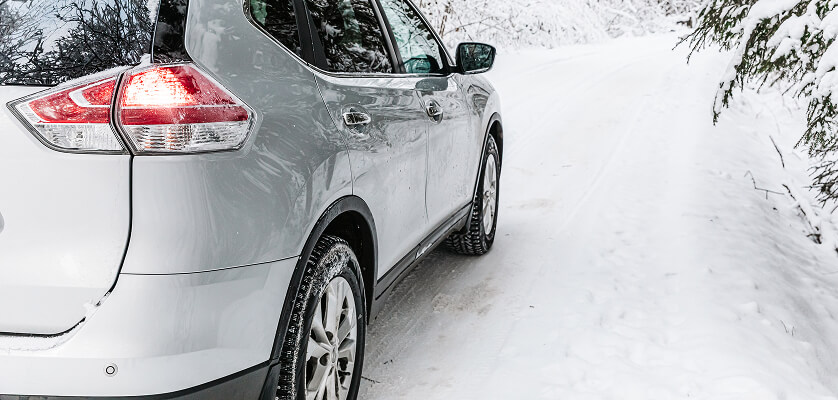
When it comes to winter driving, your tires matter far more than whether you're driving an SUV, sedan or AWD vehicle. Tires directly impact how much friction you have on snow and ice, which ultimately affects braking distance, steering control & the ability to climb hills.
Even a 4WD SUV becomes unsafe if it’s riding on worn all-season tires, while a small sedan with high-quality winter tires can outperform larger vehicles in many real-world scenarios.
All-Season vs. Winter vs. Studded Tires
You need to have a proper understanding of winter tire types for a safe journey:
-
All-Season Tires
- Designed for mild year-round conditions
- Harder rubber compound loses grip below 45°F (7°C)
- Adequate for light winter climates but not ideal for real snow or ice
Best for:
- Urban areas with light snowfall and well-salted roads.
Limitations:
- Longer braking distance
- Reduced acceleration on snowy inclines
- Not suitable for mountain passes or ski-country storms
-
Winter Tires (Studless)
- Softer rubber stays pliable in extreme cold
- Deep, aggressive tread for snow evacuation
- Micro-siping improves grip on ice
- Marked with the 3PMSF (Three-Peak Mountain Snowflake) symbol
Best for:
- Real winter environments: mountain roads, ski trips, freezing temps.
Strength:
- Winter tires can shorten ice braking distance by 30–40% vs all-season tires, often outperforming AWD.
-
Studded Tires
- Steel studs provide maximum traction on hard-packed ice
- Excellent for extreme regions with persistent icy surfaces
- Can damage pavement and are restricted or regulated in many regions
Best for:
- Alaska, northern Scandinavia, rural mountain towns with ice that remains for months.
Limitations:
- Noisier and less efficient
- Not necessary for most resort trips where plows operate regularly
- Seasonal legal restrictions apply
Why does tread depth matter in winter tires?
Tread depth determines how well a tire can push snow out of the way and maintain ground contact. Even premium winter tires lose effectiveness as they wear down.
Important thresholds:
- New winter tires: ~10–12/32"
- Minimum winter safety depth: 6/32"
- Below 4/32": Significant loss of snow traction
Interestingly, many of us never ask the suppliers questions related to the brand & model of the winter tires on the rental, tread depth, etc. Doing so instantly boosts your safety and dramatically reduces risk on mountain roads.
Snow chains & must-have gear for your ski trip rental car
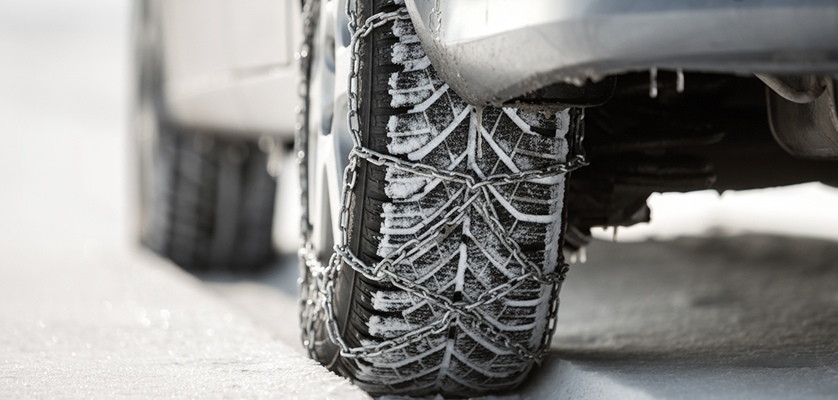
Winter driving laws vary widely around the world & keep in mind that in many regions, you won’t be allowed to proceed on mountain roads without the right equipment. Understanding these requirements helps travelers avoid fines, road closures & dangerous situations.
Chain laws by region
Snow chain rules differ significantly depending on where you’re driving:
-
United States (Sierra Nevada, Cascades, Rockies):
Some roads use chain control levels (especially in severe conditions, e.g., R3 in California) where chains are required on all vehicles, even AWD or 4WD. Colorado’s I-70 enforces traction laws and may require you to carry chains or approved traction devices during storms.
-
Europe (Alps – Italy, France, Austria, Switzerland):
Many alpine regions require drivers to carry chains at all times in winter, even when the road looks clear. When chain signs are posted, you must install them or risk fines or being turned around.
-
Japan (Hokkaido, Tohoku, Honshu ski areas):
Winter tires are standard on rentals, but police often require chains on steep or icy resort access roads, regardless of whether the car has AWD.
Key takeaway: The legality isn’t just about using chains; many regions require you to carry them as a condition for accessing mountain roads.
Other mandatory winter equipment (varies by country)
Even if you’re just renting a car, many countries require you to carry winter emergency items legally. Therefore, always check with your supplier if these Add-ons are available or not.
- Reflective Triangle: required across Europe & Japan. It must be placed behind the vehicle if you stop on the roadside in winter conditions.
- High-Visibility Vests: mandatory in many EU countries. You must put them on before exiting the car during breakdowns or checks.
- Ice Scraper: often required in Europe and Japan. It is essential for removing frost and maintaining visibility each morning.
- Shovel: common in Nordic countries and ski towns. Useful for digging out after overnight snow or clearing around tires.
- Tow Hook: many cars include a removable tow hook in the trunk. Crucial for safe roadside recovery in snow, especially in Japan and the Alps.
Some additional helpful items
These are not always mandatory, but extremely useful!
- Tire pressure gauge (cold temps reduce PSI)
- Traction boards or sand
- Headlamp or flashlight
- Blanket and warm gloves
- Windshield washer fluid rated for sub-freezing temps
Top car features you need for safe mountain driving
Mountain driving in winter is not just about AWD or a big vehicle. It requires specific cold-weather features that dramatically improve safety, visibility & control. When reserving a rental car for ski trips or snowy passes, look for the features below:
Visibility & cold-weather comfort features
-
Heated Mirrors
This feature prevents mirrors from icing over during storms or after parking overnight. Critical for lane changes on snowy highways where visibility is already limited.
-
Heated Windshield
Some cars offer built-in heating elements that rapidly melt frost and thin ice. This saves time and prevents scraping damage.
-
Winter Wiper Blades
Designed with a rubber shroud that prevents ice buildup. Essential for keeping your windshield clear during heavy snow or slush.
-
Remote Start
Allows you to warm the cabin, defrost windows and soften the wipers before driving, especially helpful after overnight freezes.
Control systems for mountain terrain
-
Hill-Start Assist
It prevents the vehicle from rolling backward on steep, icy inclines when transitioning from brake to accelerator. This feature is invaluable on mountain switchbacks.
-
Downhill Assist Control (DAC)
This characteristic automatically controls speed on steep descents, preventing wheel slip and reducing brake overheating on long snowy downgrades.
-
Traction Control Modes
Modern vehicles offer snow-specific mode settings that soften throttle response and improve grip. “Snow,” “Ice” & “Deep Snow” modes optimize traction. AWD systems may shift power toward the rear for better climbing stability.
Tire & Temperature Features
-
Tire Pressure Monitoring System (TPMS)
Cold temperatures reduce tire pressure by 1 to 2 psi for every 10°F drop. TPMS alerts help maintain proper inflation, which is essential for traction and braking performance on winter roads.
Ski, drive, save: smart money moves for your rental car
Winter rental car prices keep on fluctuating, especially in ski regions where demand spikes with each snowstorm. These strategies help you secure the best deal without sacrificing safety or vehicle quality.
-
Book from city locations instead of Airports
If it is possible, avoid airport pickup as it often includes premium location surcharges and higher winter fees. You can use airport-only inventory to compare options, then check nearby city branches for the same model at a lower price.
-
Recheck for price drops weekly
Rental prices change frequently based on snow forecasts, cancellations & inventory shifts. Simply rebooking at the lower rate can save you hundreds; most reservations are free to modify or cancel until pickup.
-
Watch for snow-related price fluctuations
When a major snowstorm is forecast in a popular ski region, AWD and SUVs surge in price & inventory sells out fast. So it is advised to book before the storm hits the forecast cycle.
-
Be attentive to the seasonal deals
Many rental companies provide seasonal offers for their customers. These perks include free additional drivers, extra mileage or discounts during midweek travel, priority access to winter-equipped vehicles, etc.
-
Use the 2 to 3-week booking window
A great time to book a winter rental car is 3 to 4 weeks before your trip. The best winter-ready cars (like SUVs and AWD models) can be sold out if you book last minute.
Stay safe on winter roads with your car rental for ski trips
Winter roads can change quickly, from slush to glare ice to whiteout conditions in minutes. These essential safety tips help keep you in control when driving in snow-heavy mountain regions:
-
Preventing skidding → Keep movements slow & smooth
Most skids happen due to sudden braking or steering. Always accelerate gently, take a turn slowly & brake early and lightly.
If the car starts to slide, look and steer where you want to go, not toward the obstacle.
-
How to get unstuck in snow → Use the “rocking” method
Shift between drive and reverse to gently rock the car free instead of spinning the wheels.
Clear snow from under the tires and around the bumper to reduce resistance.
-
Using Floor Mats for Traction → Emergency Trick
If you have zero grip, slide rubber floor mats under the drive wheels. This gives enough traction to crawl out of icy parking spots or unplowed areas.
Just remember to retrieve the mats afterward.
-
How to brake on ice → ABS is your friend, don’t pump it
Modern cars have ABS, which pulses the braking automatically. You just need to press the brake firmly, let the system work & steer gently while braking. If you feel vibrations, that means ABS is doing its job.
-
What to do in whiteout conditions → Slow down & follow “reference points”
Visibility can drop to zero during heavy snow squalls. You need to reduce speed, use low-beam headlights (never high beams in snow) & follow roadside markers, reflectors, or the edge line.
-
Reading avalanche warning signs on mountain roads → They exist for a reason
Mountain highways often have avalanche-prone zones marked by signs. When you see them, don’t stop; you need to keep a steady pace through the zone.
After heavy snowfall, some roads may close entirely for avalanche control, so always check local travel advisories.
Booking your ski trip car rental made easy
Booking a winter rental car for a ski trip is easier when you follow a simple, structured process. Use these steps to make sure you get the right car, the right equipment & the right insurance for safe mountain driving.
-
Compare car types:
Look at AWD vs. 4WD vs. FWD based on your route and expected snow. You can consider SUVs for deep snow, sedans for budget & vans for groups.
-
Check tire details:
You must confirm that they are winter tires, not just all-season. Ask your rental supplier about tread depth, brand & whether they offer studded options in snowy regions.
-
Verify insurance coverage:
Confirm CDW, tire & windshield coverage, and underbody protection. Additionally, you can check whether your credit card insurance applies in snow/at high altitudes.
-
Add essential winter equipment:
Like snow chains, ice scraper or snow brush, roof box, if you have lots of ski gear, etc.
-
Understand pickup & drop-off logistics:
You should confirm after-hours pickup/drop-off rules. Check if the location offers free snow chain installation help. Reviewing fuel policy is a must, along with recording the car's condition (interior as well as exterior parts) before driving off.
-
Verify local road laws:
Check if the region requires chains, winter tires or any kind of special permits. Gather information on seasonal road closures and avalanche zones.
Hit the slopes confidently: ski car rental summary
Choosing the right winter rental car for your ski trip can make the difference between a stressful mountain drive and a smooth, safe adventure. The key is simple: pick a vehicle built for snow, double-check the tires and safety equipment, and understand the insurance and local road rules before you go. With the right prep, winter travel becomes far easier & far safer.
Your ski trip car rental answers
-
Are chains required in my ski rental car?
Yes, chains are often required for ski trips, even if you rent an AWD or 4WD vehicle. Chain laws vary by region and some mountain roads or checkpoints may demand that you carry chains or install them during snow alerts, so always verify local regulations before you go.
-
Should I rent a diesel or petrol car for my ski trip in cold weather conditions?
Petrol cars are generally more reliable in very cold weather because diesel can thicken or “gel” in freezing temperatures. However, diesel engines offer better torque on steep, snowy roads. If you're traveling to extremely cold destinations, petrol is the safer choice, whereas for moderate cold with lots of climbing, diesel works well.
-
Can I hire an AWD for my ski trip?
Yes, you can hire an AWD for your ski trip. It’s great for plowed roads, offering better traction on snow and ice but still pair it with winter tires for the best safety.
-
Are snow tires included in the car rental price?
Not always. Snow tires may be included in some ski-region rentals but many companies charge an additional “winterization” fee. Always check your booking voucher and confirm with your supplier the exact tire type as all-season tires are not suitable for heavy snow.





















































'%3E%3Ccircle cx='0' cy='0' r='7' fill='%23fff'%3E%3CanimateTransform attributeName='transform' type='scale' begin='-0.24691358024691354s' calcMode='spline' keySplines='0.3 0 0.7 1;0.3 0 0.7 1' values='0;1;0' keyTimes='0;0.5;1' dur='0.6407407407407407s' repeatCount='indefinite'/%3E%3C/circle%3E%3C/g%3E%3Cg transform='translate(50 50)'%3E%3Ccircle cx='0' cy='0' r='7' fill='%23fff'%3E%3CanimateTransform attributeName='transform' type='scale' begin='-0.12345679012345677s' calcMode='spline' keySplines='0.3 0 0.7 1;0.3 0 0.7 1' values='0;1;0' keyTimes='0;0.5;1' dur='0.6407407407407407s' repeatCount='indefinite'/%3E%3C/circle%3E%3C/g%3E%3Cg transform='translate(75 50)'%3E%3Ccircle cx='0' cy='0' r='7' fill='%23fff'%3E%3CanimateTransform attributeName='transform' type='scale' begin='0s' calcMode='spline' keySplines='0.3 0 0.7 1;0.3 0 0.7 1' values='0;1;0' keyTimes='0;0.5;1' dur='0.6407407407407407s' repeatCount='indefinite'/%3E%3C/circle%3E%3C/g%3E%3C/svg%3E)