Welcoming a record - breaking 40+ million tourists in the year 2025, Japan has witnessed significant growth in tourism over the years, which has also led to an increase in demand for renting cars. The reason behind such enhancement lies in its diversity.
Main cities like Tokyo and Kyoto offer a perfect blend of modernity and tradition, and regions like Kushiro & Sapporo (on Hokkaido Island) provide dramatic views and picturesque landscapes. While spring blossoms and autumn are known to bring in more tourists, winters too have started attracting the attention of travelers across the globe.
If you are planning to visit Japan this winter and renting a car is in your mind, then you have landed on the right page. Know when to rent a car? What to carry for pick-up? Discover car rental tips all here.
When to consider renting a car in Japan during winter
Timing during winter:
Mid-December to mid-February: Regions like Sapporo and Abashiri experience heavy snowfall. In fact, many winter festivals also fall around this time that attract the attention of tourists. To get the best car rental deals, it’s best to book your rental somewhere between 3-6 weeks before your trip.
Late February to March: Less snowfall, still plenty of snow-covered landscapes to see. Reserve your rental car 2-4 weeks early.
According to region:
When visiting the outskirts of Japan: The Sea of Japan Coast, the Japanese Alps, Tohoku, and Hokkaido are the outskirts regions of Japan that receive heavy snowfall every year. With hardly any access to public transportation, renting a car becomes the best option to enjoy the scenic views with absolute freedom.
When visiting major cities with less snowfall: Tokyo, Kyoto, Nagoya, & Osaka are a few of the major cities in Japan that experience little to no snowfall. If you are planning to travel here just to visit nearby places, you can opt for public transit as well.
Car rental tips for winter in Japan
Choose a winter-ready rental car
Every car category is built to suit different travelling needs. For example, if you are exploring locations like Tohoku or Nagano, which have winding, snowy roads, an AWD or 4WD vehicle with suitable winter gear can help you drive through dry asphalt (Kansō romen) and icy patches (Tōketsu kasho) easily.
Mandatory add-ons for driving in Japan during winters
In regions receiving heavy snowfall like Hokkaido and Tohoku, rental cars often come equipped with studless tires and winter chains. GPS for navigation, suitable child seats & emergency supplies (emergency flare (hatsuen), reflective warning triangle (hansha sankakkei), basic ice scraper) are a few other essentials; if available, you can request them from suppliers.
Know how to add extras to your rental.
Leave extra time before dropping off the vehicle
Estimated time to cover the distance between destinations in Japan is not always predicted accurately by a GPS, especially when in regions that experience heavy snowfall. It’s best to follow the “double the time rule” (adding extra time to your overall GPS-estimated driving time) to avoid any stress of dropping the car at the assigned time and paying any penalty.
Sometimes NEXCO (short for Nippon Expressway Company), a government-owned group of companies that operate, manage, and construct expressways and toll roads in Japan, may close down expressways and roads during heavy snowstorms. Keep tracking navigation apps to be aware of such situations.
Do consider rental restrictions
Not all suppliers allow travelers to take their rental in mountainous regions. You need to speak with your supplier before making any plans. If you still drive your rental to restricted areas, you might be penalised.
Keep the contact details of roadside assistance accessible
Suppliers always provide contact details of roadside assistance in case of any emergency. Make sure to keep all the information accessible throughout the journey.
Driving tips to follow with a car rental in Japan during the winter season
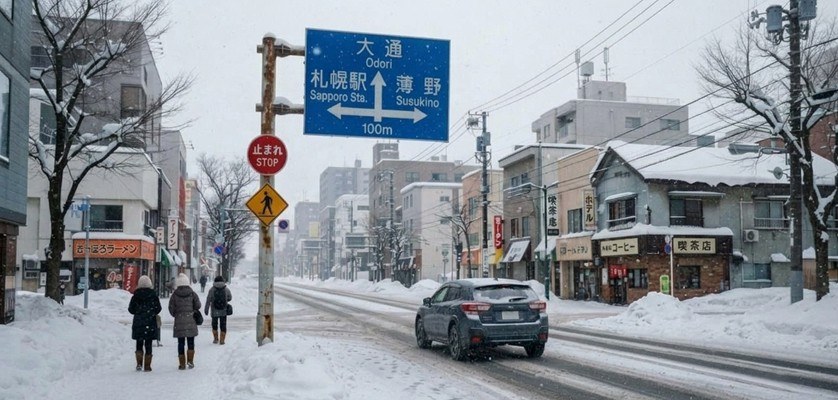
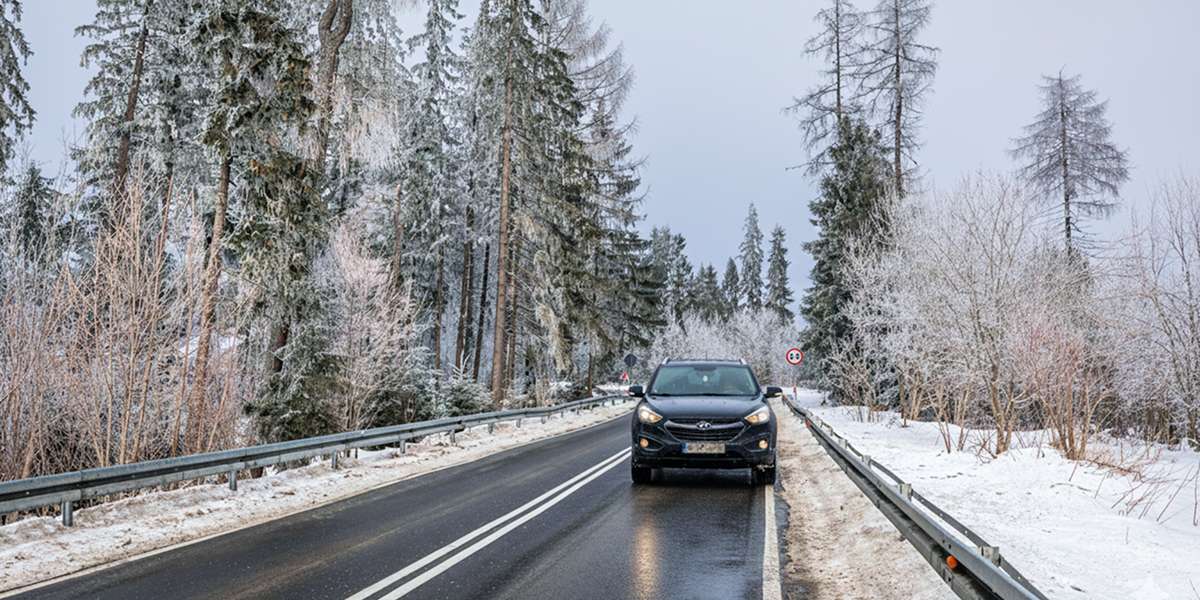
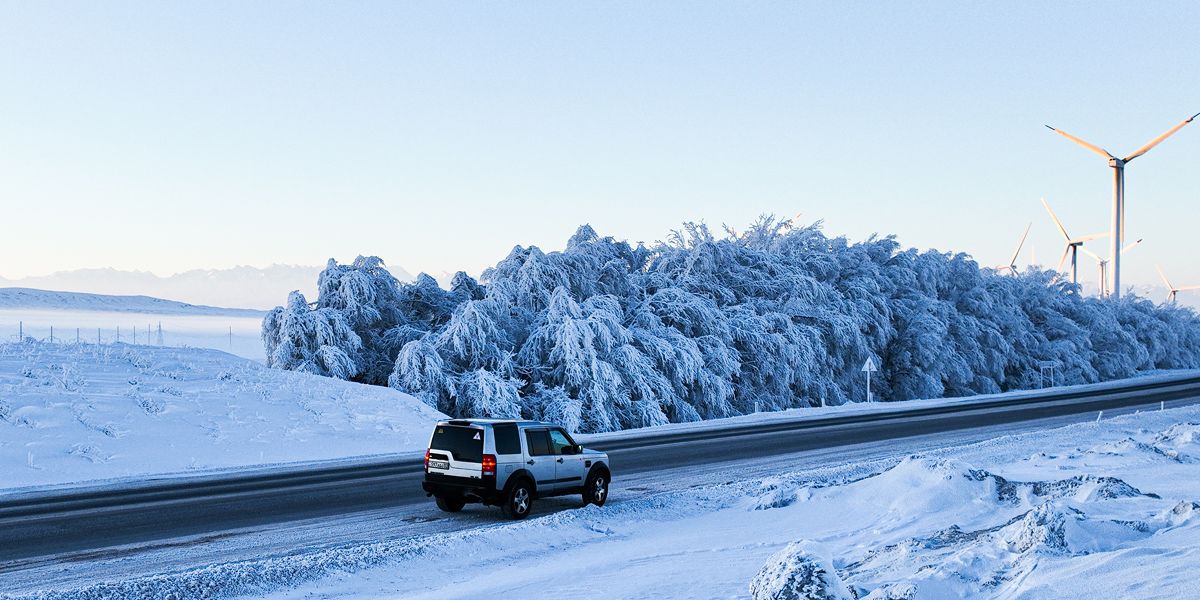
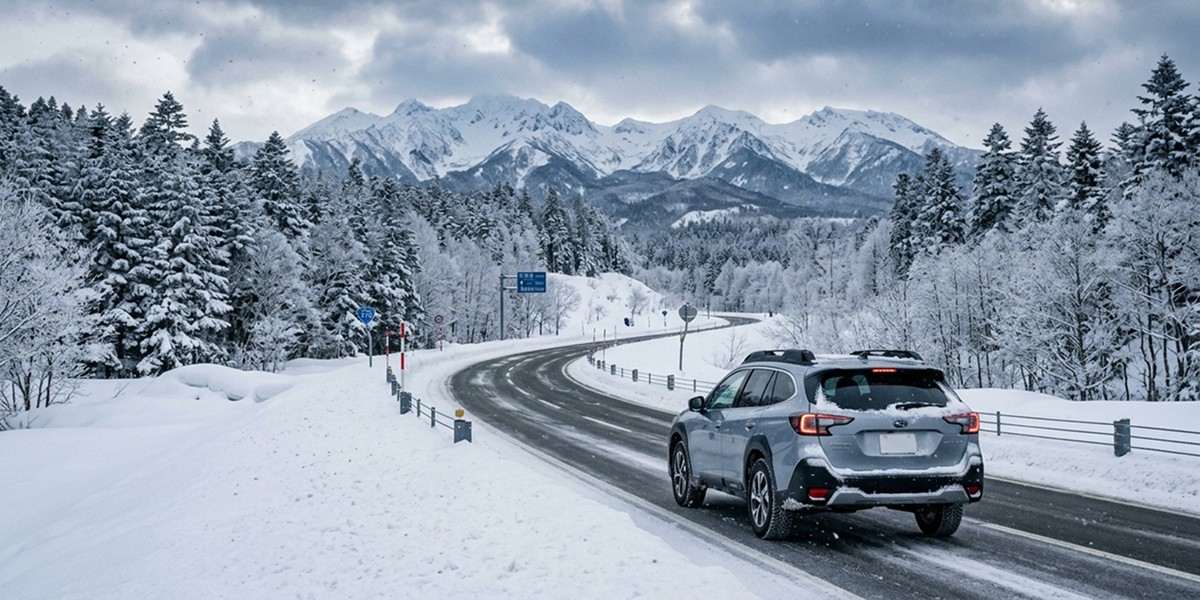
Driving a rental in the snow-covered streets of Sapporo.
Keep the car to the left
Travelers from countries like the USA, Canada, Russia, and China, where they drive on the right side, may find it difficult to get accustomed to it. Stay extra careful at intersections and on narrow roads.
Follow posted speed limits & road safety signs
Driving in winter can be tricky, especially in hilly or mountainous regions. Always follow the posted speed limit, infact slow down even further on roads that are covered in snow or ice. Here is a quick breakdown of the limits:
Urban roads: 30 - 60 km/h
Rural roads: Often 40 - 60 km/h depending on the road
Expressways: 100 km/h
Snowy regions: May be reduced to 50 - 80 km/h
In addition, Japanese authorities have introduced several road safety signs like downward-pointing arrows that indicate road boundaries and blue stop lines designed to help drivers navigate road markings when ice and snow completely bury them. Look out for them to avoid misjudging roads.
Use studless winter tires
Navigating your way in snowy regions of Japan requires using studless winter tires. These tires use a compound that remains flexible and pliable in cold temperatures at 0°C or below. The tread pattern absorbs a thin layer of water, ensuring direct contact with the snow or ice.
Add snow chains wherever necessary
Some areas in Japan might require you to add snow chains to your tires. Follow the instructions and add the chains. Road authorities like NEXCO Central may inspect to verify the installation.
Maintain proper distance between two cars
Blowing snow and spray from front moving cars can distort your view of the road. It’s best to move while maintaining proper distance from other cars.
Avoid sudden braking or steering
To prevent your rental from skidding or spinning on snowy or icy roads, avoid pushing the brakes, taking sharp turns, or rapid acceleration.
Check the road conditions before driving
Before driving off to beautiful mountainous regions of Japan, it’s best to check the weather and condition of the roads. iHighway Japan operated by West, East & Central and Drive Traffic, operated by NEXCO East, are two of the prominent applications used for tracking the road conditions in Japan. They provide live camera feed options, providing you with fresh visuals of the route you want to travel on.
Toll
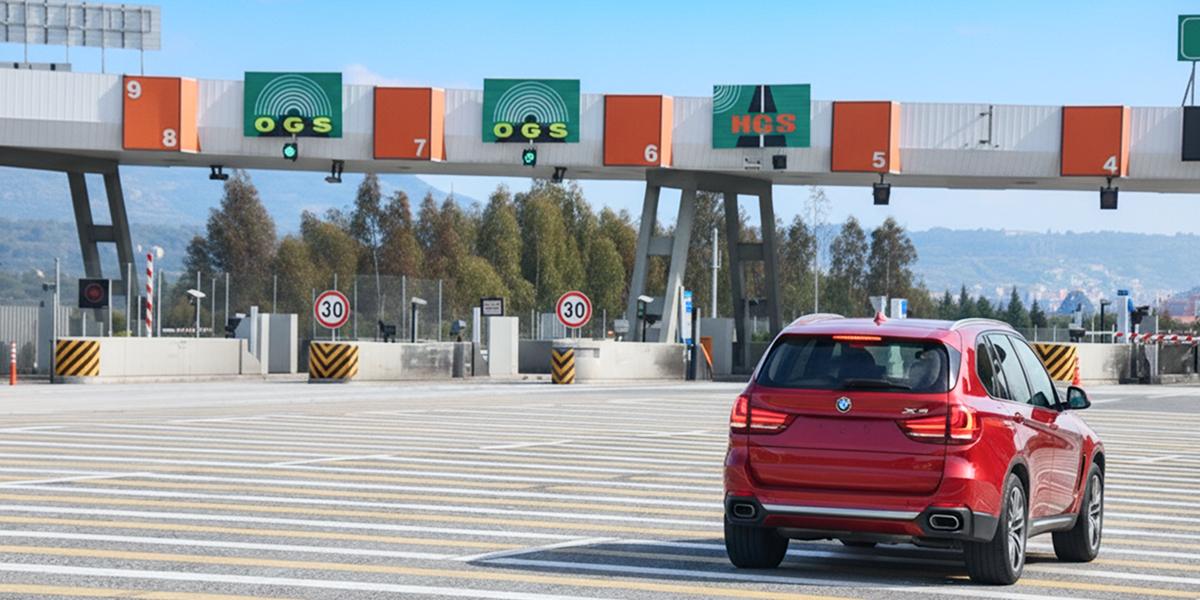
Most tolls in Japan charge a fee according to the distance the passenger has traveled. Using an ETC (Electronic Toll Collection) card and inserting it into the device, the passenger can pay the fee. The system records your journey and charges the toll automatically.
Top car rental categories for driving in Japan during the winter season
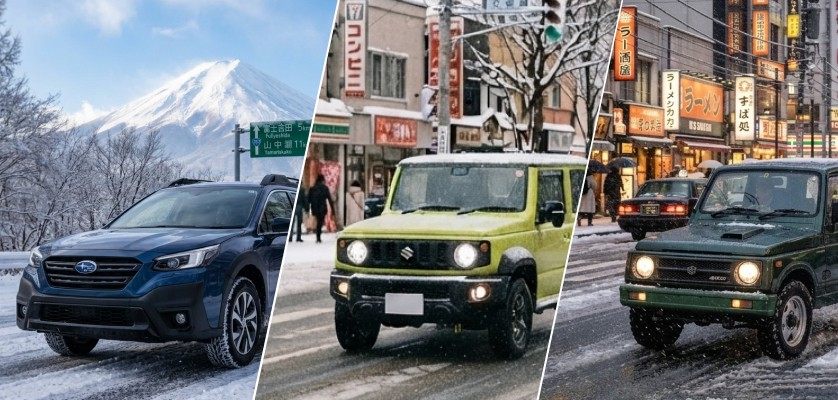
| Car Category | Features |
|---|---|
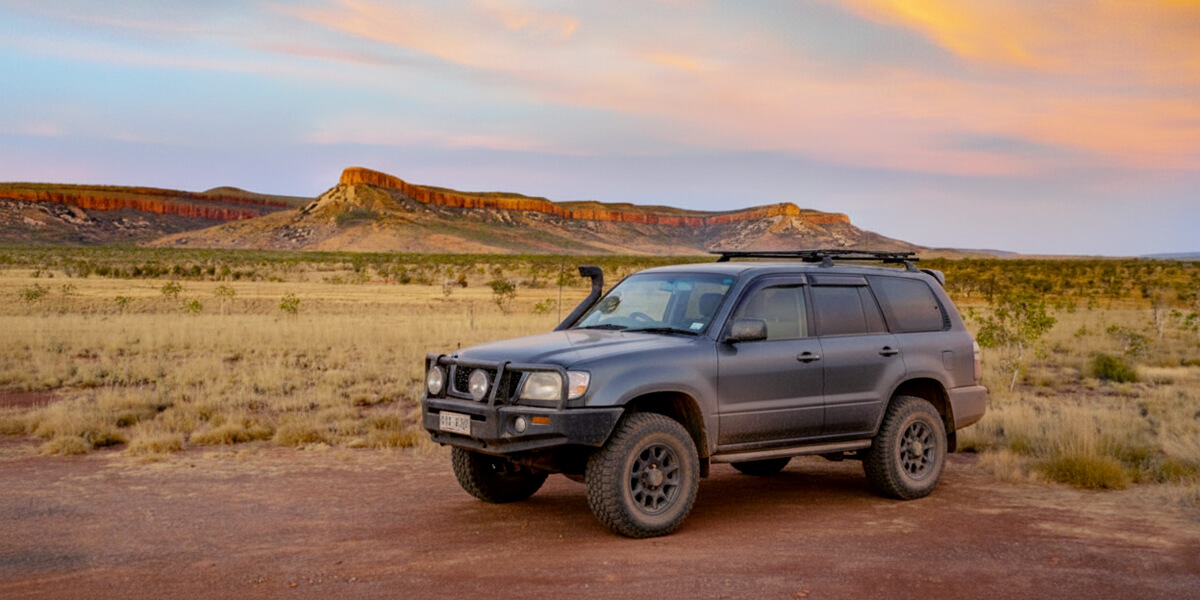
| AWD Crossovers & SUVs |
|
| Rugged 4x4 Mini-SUVs |
|
| Compact Cars with 4WD |
|
Tip: AWD and 4WD do not have a distinct identity amongst the car rental companies in Japan. Even if you sign up for a 4WD, you might end up with an AWD type vehicle.
Quick Japan winter car rental checklist
Documentation
For Japanese nationals
- Carry your valid driver’s license
- Booking voucher
- A valid credit card under the driver’s name
For travelers across the world
- International Driving Permit (IDP)
- Valid passport
- A valid driver’s license from your home country
- Booking voucher
- A valid credit card in the name of the driver
Important gear & accessories
- Studless snow tires
- Jumper cables
- Snow brush and ice scraper
- Snow chains & jack stand
- Offline navigation
Choose popular pickup locations
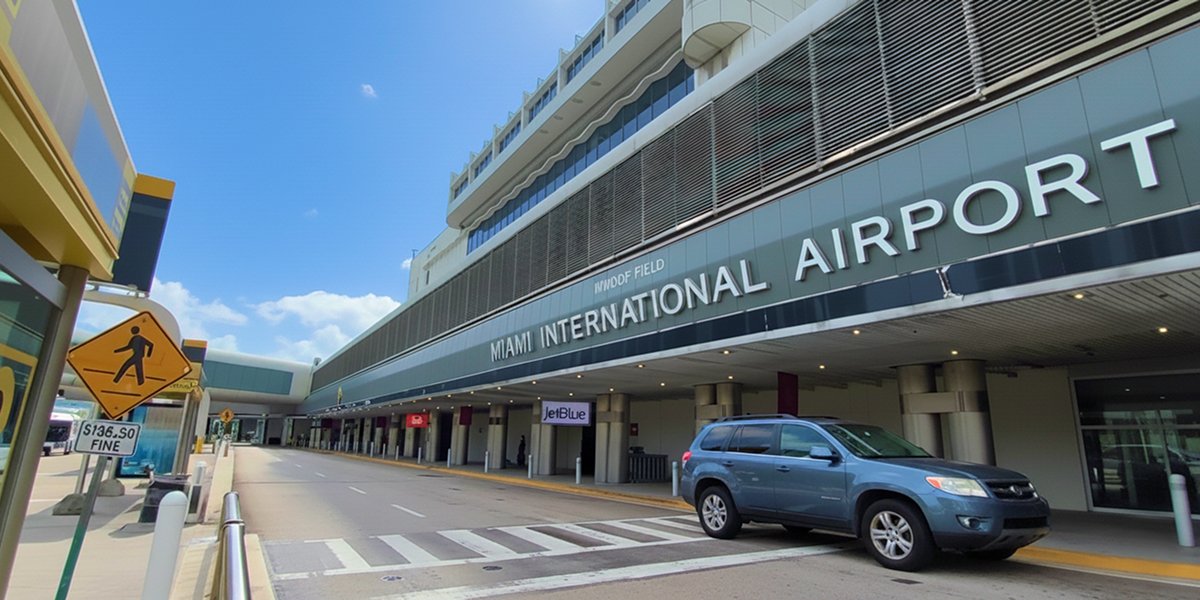
Airports have the widest number of car rental suppliers. Choose the nearest and most popular airport in the region you are planning to travel. Some of the notable examples are:
Final takeaway
One thing that you must understand while driving your rental in Japan is that preparation is key. Roads might appear to be fine, but you never know when you will cross paths with an intersection or downhill corner. Always carry the essential accessories & gear with you and choose the vehicle keeping in mind the route you will be traveling.
FAQs
-
Is it a good idea to rent a car in Japan during winters?
If you are comfortable with driving in snowy regions and can take precautions, then renting a car in Japan during winter is a good idea. Always make sure to check the road conditions and weather before heading out and follow all the rules and regulations.
-
Is it challenging for a foreigner to drive a car in Japan?
Initially, you need a little time to get accustomed to the driving rules. For example, most countries in the world drive on the right-hand side, but the case is opposite in Japan, which can be a bit tricky for some travelers.
-
Should I rent an AWD or 4WD car for a winter trip in Japan?
Yes, opting for an AWD or 4WD car for a winter trip in Japan is an excellent choice. In mountainous regions where it snows heavily, these vehicle categories ensure easy & comfortable movement. However, before choosing a vehicle, pay attention to the passenger count, luggage & road conditions.
-
What is the minimum and maximum age for renting a car in Japan?
Generally, the minimum age for renting a car in Japan is 18 years, and the maximum age is between 70 and 80 years. However, the age limit may vary by supplier. Therefore, it is best to go through the rental terms to get complete information on the age requirements.
















































'%3E%3Ccircle cx='0' cy='0' r='7' fill='%23fff'%3E%3CanimateTransform attributeName='transform' type='scale' begin='-0.24691358024691354s' calcMode='spline' keySplines='0.3 0 0.7 1;0.3 0 0.7 1' values='0;1;0' keyTimes='0;0.5;1' dur='0.6407407407407407s' repeatCount='indefinite'/%3E%3C/circle%3E%3C/g%3E%3Cg transform='translate(50 50)'%3E%3Ccircle cx='0' cy='0' r='7' fill='%23fff'%3E%3CanimateTransform attributeName='transform' type='scale' begin='-0.12345679012345677s' calcMode='spline' keySplines='0.3 0 0.7 1;0.3 0 0.7 1' values='0;1;0' keyTimes='0;0.5;1' dur='0.6407407407407407s' repeatCount='indefinite'/%3E%3C/circle%3E%3C/g%3E%3Cg transform='translate(75 50)'%3E%3Ccircle cx='0' cy='0' r='7' fill='%23fff'%3E%3CanimateTransform attributeName='transform' type='scale' begin='0s' calcMode='spline' keySplines='0.3 0 0.7 1;0.3 0 0.7 1' values='0;1;0' keyTimes='0;0.5;1' dur='0.6407407407407407s' repeatCount='indefinite'/%3E%3C/circle%3E%3C/g%3E%3C/svg%3E)
